

Key Takeaways
- Routine cleaning and inspection prevent device degradation and reduce infection risk.
- Worn or damaged components — such as TENS electrode pads or nebulizer tubing — should be replaced promptly.
- Proper storage conditions protect device integrity between uses.
- Always follow the manufacturer's instructions for your specific device model.
- Consult your healthcare provider if a device produces unexpected results or shows signs of damage.
Summary
22 items · 20–45 minutes
Why Maintenance Matters for Home Therapeutic Devices
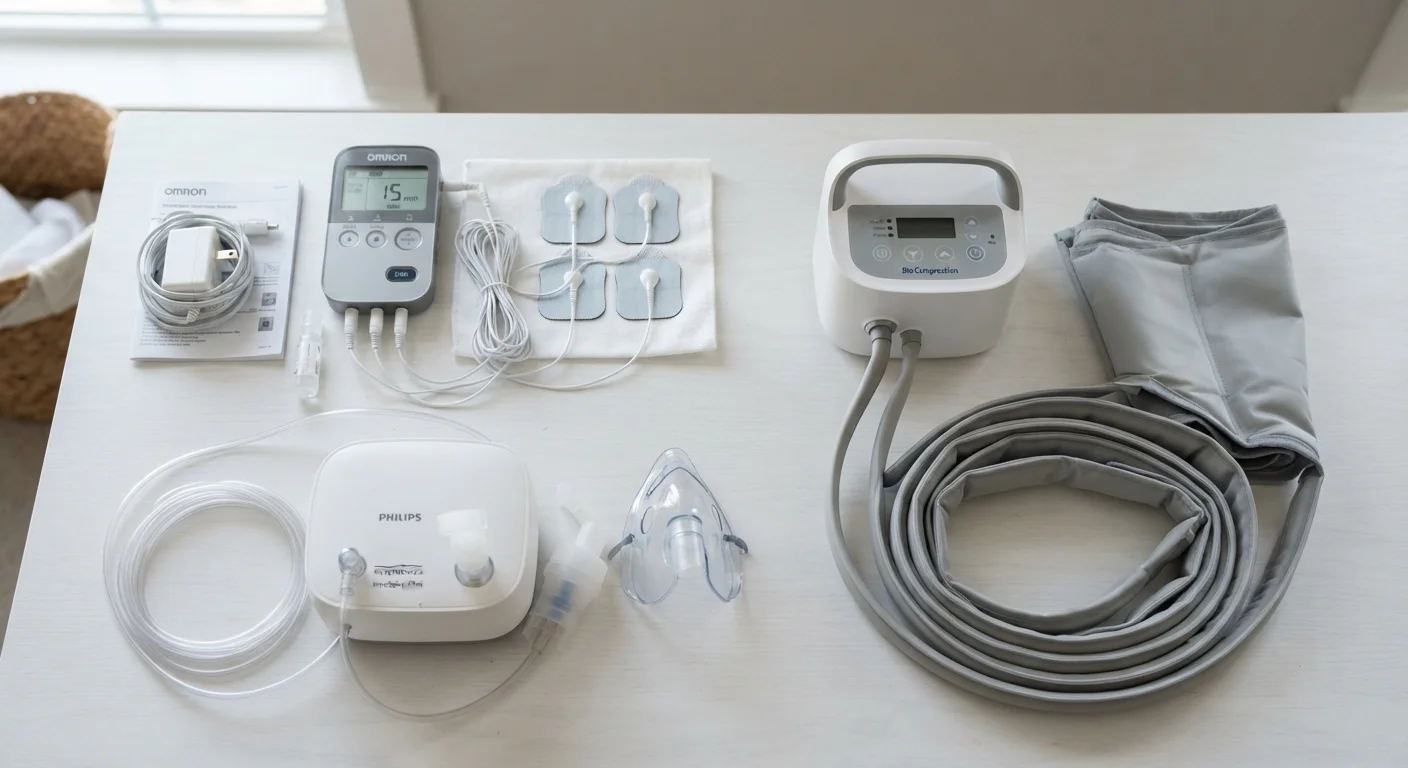
Home therapeutic devices — including TENS units, nebulizers, compression pumps, and low-level light therapy devices — play a meaningful role in supporting ongoing health management for many families. But unlike devices used in clinical settings, home devices depend entirely on the user to stay clean, functional, and safe.
Neglecting maintenance can quietly undermine effectiveness. Degraded electrode pads may deliver uneven stimulation; a nebulizer with residue buildup can harbor bacteria; a frayed power cord is a genuine safety hazard. The most common device errors often trace back to skipped cleaning steps or worn components that were never replaced.
This checklist is organized by device type and task frequency. Work through it at a regular interval — many items apply after each use, while others are monthly or as-needed reviews. Keep your device manual nearby; manufacturer guidance always takes precedence over general recommendations.
Mild dish soap and warm water
Used to wash removable nebulizer components and other washable parts after each use.
Clean lint-free cloths or paper towels
For wiping down device exteriors and drying components after washing.
Replacement electrode pads
Needed when existing TENS/EMS pads lose adhesion or conductivity.
Replacement nebulizer components (cup, tubing, mouthpiece)
Required when parts show cracks, cloudiness, or residue that cannot be removed by cleaning.
Device manual
Provides model-specific cleaning schedules, approved disinfectants, and replacement intervals.
White vinegar or manufacturer-approved disinfectant solution
Used for periodic disinfection of nebulizer components per manufacturer guidance.
The Maintenance Checklist
Use the groups below to audit each device you use at home. Check off items after every use, weekly, or on the schedule noted. If you care for an older adult who uses therapeutic devices at home, see key considerations for older adult device use for additional guidance specific to that population.
After Every Use — All Devices
Nebulizer — Cleaning Protocol
TENS / EMS Unit — Electrode and Lead Care
Compression Pump — Garment and Device Checks
Storage and Environment
Periodic Review — Monthly or As Needed
Stop Use and Seek Guidance if Damage Is Found
If you discover a cracked housing, exposed wiring, burn marks, or any sign of electrical damage on a therapeutic device, stop using it immediately. Do not attempt to repair electrical components at home. Contact the manufacturer for service guidance or ask your healthcare provider about a safe replacement. Using a damaged device may pose a risk of electrical injury or deliver ineffective therapy.
For families managing a child's nebulizer therapy, a detailed assembly and hygiene walkthrough is available in our guide on setting up a nebulizer safely for a child.
This article provides general health information for educational purposes only and is not a substitute for professional medical advice. Always consult a qualified healthcare provider with questions about your specific devices, conditions, or symptoms.