

Key Takeaways
- Always wash hands and sterilize nebulizer components before each treatment session.
- Use only the medication and dosage prescribed by your child's healthcare provider.
- A properly fitted mask or mouthpiece ensures medication reaches the lungs effectively.
- Clean and air-dry all parts after every use to prevent bacterial and mold growth.
- Contact a clinician if your child's breathing worsens or shows no improvement after treatment.
What you will need
What a Nebulizer Does and When It's Used for Children
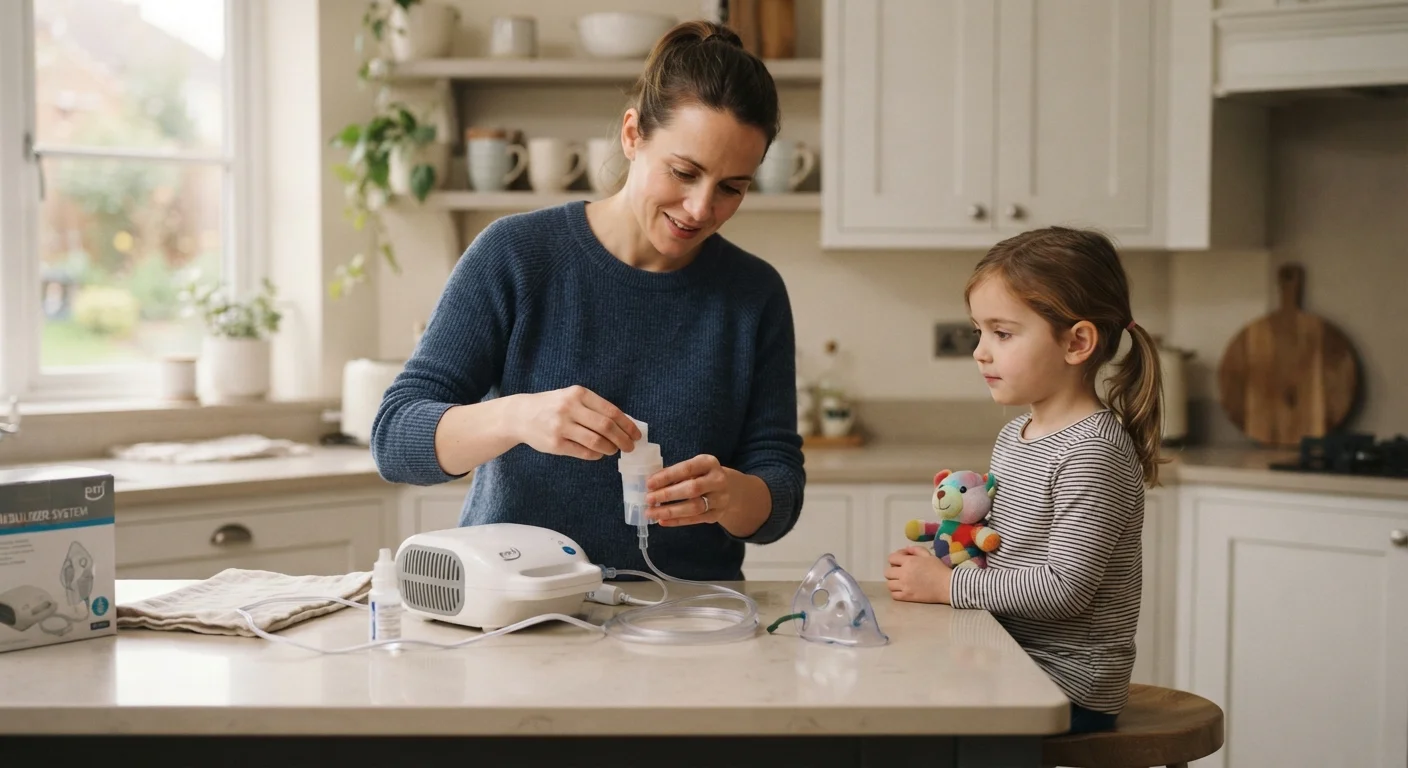
A nebulizer is a medical device that converts liquid medication into a fine mist, allowing it to be inhaled directly into the airways and lungs. For children who cannot coordinate the breath-and-press technique required by a pressurized inhaler, a nebulizer delivers medication passively — the child simply breathes normally through a mask or mouthpiece. This makes it a commonly prescribed option for young children managing conditions such as asthma, bronchiolitis, or croup, as directed by a clinician.
Nebulizers come in two main types used at home: jet nebulizers (also called air-compressor nebulizers), which use compressed air to aerosolize the medication, and mesh nebulizers, which vibrate liquid through a fine mesh to produce mist. Your child's prescriber or pharmacist can clarify which type is compatible with the prescribed medication. To understand how nebulizers compare with other delivery methods, see our overview of nebulizers and inhalers.
This article is general health information and is not a substitute for personalized medical advice. Always follow the specific instructions provided by your child's healthcare team.
What you will need
Equipment You Will Need
Before beginning, gather all components and confirm that each part is clean and undamaged. Using a cracked cup or perished tubing can compromise medication delivery and introduce contamination risks.
Nebulizer compressor or mesh unit
Powers the device to convert liquid medication into an inhalable mist.
Medication cup (nebulizer chamber)
Holds the prescribed liquid medication during the treatment session.
Air tubing
Connects the compressor to the medication cup to drive airflow.
Child-sized mask or mouthpiece
Delivers the medicated mist to the child's airways; mask size should fit snugly over nose and mouth.
Prescribed medication
The liquid solution to be nebulized, exactly as directed by the prescribing clinician.
Clean towel or drying rack
Used to air-dry components thoroughly after cleaning.
Sealed storage bag or container
Keeps dried, disassembled components free from dust and contamination between sessions.
Step-by-Step Setup and Treatment
Follow these steps for each treatment session. Consistency in technique helps ensure your child receives the full prescribed dose.
Wash your hands thoroughly
Before touching any nebulizer component, wash your hands with soap and warm water for at least 20 seconds and dry them with a clean towel. This reduces the risk of introducing bacteria into the medication or device parts.
Inspect all components
Check the medication cup, tubing, mask, and connectors for cracks, discoloration, or residue from previous sessions. Do not use any damaged part — contact your device supplier or pharmacist for replacements.
Prepare the medication
Using only the medication prescribed by your child's clinician, carefully open the unit-dose vial or measure the prescribed volume using the device-specific dropper or syringe. Pour the medication directly into the medication cup. Do not add extra solution or mix medications unless explicitly instructed by the prescriber.
Assemble the nebulizer
Attach the medication cup to the compressor unit via the air tubing, following your device's instruction manual. Connect the mask or mouthpiece to the top of the medication cup. Ensure all connections are snug — loose fittings can cause mist to escape before it reaches your child's airways.
Position your child and fit the mask
Seat your child in an upright or slightly reclined position — upright posture helps open the airways. Place the child-sized mask gently over the nose and mouth, ensuring a close but comfortable fit with no large gaps. If your child is old enough and cooperative, a mouthpiece held between the lips is an alternative that delivers medication efficiently.
Start the treatment and monitor your child
Switch on the compressor and confirm that a visible mist is flowing from the mask or mouthpiece. Encourage your child to breathe normally — slow, steady breaths are ideal but do not stress the child if they cannot maintain this. Most treatments last 5–10 minutes, or until the medication cup is empty and mist production ceases. Stay with your child for the entire session.
Switch off and disassemble
Once the cup is empty and mist has stopped, turn off the compressor. Disconnect the mask, medication cup, and tubing. Proceed immediately to the cleaning steps to prevent residue from drying inside components.
Making Treatments Easier for Young Children
Distraction can significantly reduce a child's resistance to wearing a nebulizer mask. Try reading a favorite book, playing a short video, or singing during the treatment. Keeping the routine consistent — same time of day, same sequence of steps — also helps children feel more comfortable over repeated sessions.
Cleaning, Storage, and When to Seek Help
Proper maintenance after every session is just as important as correct setup. Residual medication and moisture in nebulizer components create conditions where bacteria and mold can grow rapidly, posing an infection risk — particularly for a child with a respiratory condition.
After each use, disassemble the medication cup, mask or mouthpiece, and tubing connector. Wash the cup and mask in warm, soapy water, rinse thoroughly, and allow all parts to air-dry completely on a clean towel. Do not towel-dry the interior of the cup, as fibers can contaminate it. The air tubing itself should not be washed; replace it according to the manufacturer's guidance. For a full device maintenance routine, refer to our home therapeutic device maintenance checklist.
Store disassembled, dry components in a clean, sealed bag or container away from dust. Replace the medication cup and mask as recommended — typically every three to six months, or sooner if discolored or cracked.
When to Contact a Clinician
Seek prompt medical attention if your child's breathing does not improve after a prescribed treatment, if symptoms worsen, or if your child develops new symptoms such as rapid breathing, blue-tinged lips, or significant distress. Nebulizer therapy supports prescribed treatment — it does not replace emergency care. For broader context on home device safety, the family reference guide to home therapeutic devices offers a useful overview.
This article is for general informational purposes only and does not constitute medical advice. Always consult a qualified healthcare professional regarding your child's specific condition, medication, and device use.