

Key Takeaways
- TENS units and EMS devices use electrical pulses for distinct purposes — pain relief versus muscle stimulation.
- Nebulizers deliver inhaled medication directly to the airways and are commonly used for respiratory conditions.
- Heat and cold therapy devices serve different recovery stages and should not be used interchangeably.
- Always consult a healthcare provider before incorporating any therapeutic device into a home recovery plan.
- Proper maintenance of home devices is essential for safety and effectiveness over time.
Why Therapeutic Devices Appear in Home Recovery Plans
When a healthcare provider recommends a structured home recovery plan — following surgery, injury, or management of a chronic condition — therapeutic devices often play a supporting role alongside rest, medication, and follow-up care. These tools are designed to extend clinical-level support into everyday home settings, helping patients maintain progress between appointments.
Unlike diagnostic tools that measure or detect health conditions, therapeutic devices are intended to support physical function, reduce symptoms, or aid the body's healing processes. Understanding what each device does — and what it does not do — helps families use them appropriately and safely.
The eight devices described below frequently appear in clinician-recommended home recovery plans. Each entry explains how the device works and what it is generally used for. This article is for general informational purposes only and is not a substitute for personalized medical advice. Always follow your healthcare provider's specific guidance when using any therapeutic device.
Start With Your Provider's Recommendation
Before purchasing or using any therapeutic device at home, confirm with your healthcare provider or physical therapist that the device is appropriate for your specific condition. A device that benefits one recovery scenario may be ineffective or contraindicated in another. Your provider can also guide you on correct settings, session duration, and placement.
Eight Devices Commonly Found in Home Recovery Plans
TENS Units (Transcutaneous Electrical Nerve Stimulation)
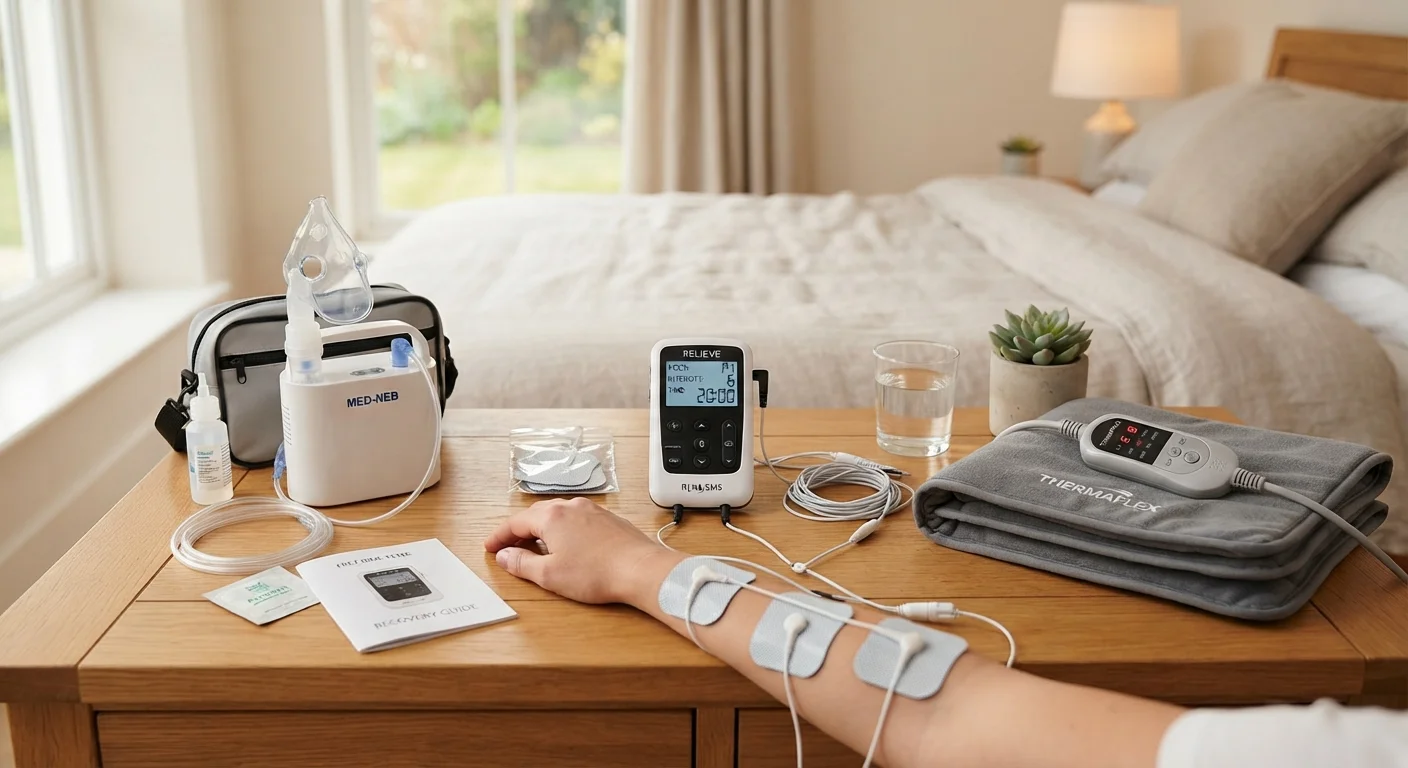
A TENS unit delivers low-voltage electrical pulses through adhesive electrode pads placed on the skin. These pulses are thought to interfere with pain signal transmission along nerve pathways — a mechanism sometimes described using the gate control theory of pain. TENS units are widely used for musculoskeletal pain, postoperative discomfort, and chronic pain conditions. They do not treat the underlying cause of pain but may help manage the symptom. For a detailed comparison of TENS with related technology, see how EMS and TENS differ.
TENS units may help manage pain symptoms but do not treat the underlying cause of discomfort.
EMS Devices (Electrical Muscle Stimulation)
While TENS targets nerve signals to reduce pain, EMS (electrical muscle stimulation) devices deliver electrical pulses intended to cause muscle contractions. They are used in rehabilitation settings to help prevent muscle atrophy after injury, surgery, or periods of immobility. Clinicians may recommend EMS as part of a structured exercise-recovery plan. EMS devices should not be confused with TENS units, as their targets and therapeutic goals differ meaningfully.
EMS devices stimulate muscle contractions to help prevent atrophy during immobility or injury recovery.
Nebulizers
A nebulizer converts liquid medication into a fine mist that can be inhaled directly into the airways. This delivery method is frequently used for respiratory conditions such as asthma, chronic obstructive pulmonary disease (COPD), and certain respiratory infections. Nebulizers are available in tabletop and portable formats; clinicians prescribe the specific medication and dosage used with them. Regular cleaning of nebulizer components is critical to prevent bacterial contamination.
Nebulizers deliver inhaled medication as a fine mist, making them essential for managing airway conditions at home.
Heating Pads and Infrared Heat Devices
Thermotherapy — the therapeutic application of heat — is used to relax muscles, improve local circulation, and ease stiffness associated with chronic conditions such as arthritis or muscle tension. Standard electric heating pads provide surface-level warmth, while infrared heat devices are marketed to penetrate slightly deeper into tissue. Heat therapy is generally applied to subacute or chronic conditions, not acute injuries with active inflammation. For guidance on when heat is appropriate versus cold, see cold therapy vs. heat therapy in recovery.
Heat therapy is suited to chronic stiffness and muscle tension, not fresh injuries with active inflammation.
Cold Therapy Systems
Cold therapy (cryotherapy) devices range from simple gel packs to motorized systems that circulate cooled water through a wrap. Cold reduces local inflammation, numbs discomfort, and limits swelling — making it particularly relevant in the acute phase following surgery or injury. Many post-surgical recovery protocols specify cold therapy application during the first 24 to 72 hours. Motorized cold therapy systems allow for more consistent temperature control compared to standard ice packs and reduce the risk of skin damage from direct ice contact.
Motorized cold therapy systems provide more consistent temperature control than standard ice packs during acute recovery.
Ultrasound Therapy Devices
Therapeutic ultrasound devices emit high-frequency sound waves that penetrate soft tissue, generating a mild thermal or mechanical effect depending on the frequency and mode used. Clinicians and physical therapists use ultrasound therapy to support healing in tendons, ligaments, and muscle tissue. Some consumer-grade devices are now available for home use, though their clinical equivalence to professional-grade equipment is not established. A provider's guidance is especially important for this category given variability in device quality and application technique.
Therapeutic ultrasound requires careful technique; home devices may differ significantly from professional clinical equipment.
Paraffin Wax Baths
Paraffin wax baths involve dipping the hands, wrists, or feet into warm, melted paraffin wax to deliver sustained, moist heat to joints and surrounding tissue. They are commonly recommended for individuals managing rheumatoid arthritis, osteoarthritis, or recovering from hand and wrist injuries. The wax coating retains heat against the skin for several minutes, and the process is often used before range-of-motion exercises to loosen stiff joints. Temperature settings should be confirmed safe before use, particularly for individuals with reduced skin sensitivity.
Paraffin wax baths deliver sustained moist heat to joints, often used before range-of-motion exercises in arthritis management.
Continuous Passive Motion (CPM) Machines
A Continuous Passive Motion (CPM) machine is a motorized device that slowly and repeatedly moves a joint — most often the knee — through a preset range of motion without active effort from the patient. CPM machines are commonly prescribed for short-term use following joint replacement or reconstruction surgery, with the goal of reducing stiffness and supporting cartilage nutrition during the early recovery period. They are typically loaned or prescribed by a surgical team and used under specific protocols rather than selected independently.
CPM machines move a joint passively through a set range, often prescribed immediately after joint replacement surgery.
Devices Complement Care — They Don't Replace It
Therapeutic devices are tools that support a broader recovery or management plan. They are not standalone treatments and should be used alongside — not instead of — professional medical care. If symptoms worsen, new symptoms develop, or you are uncertain about device use, contact your healthcare provider promptly. For a broader overview of these tools in context, the home therapeutic devices family reference guide is a useful starting point.
Using These Devices Responsibly at Home
Each device on this list carries its own usage protocols, contraindications, and maintenance requirements. Before starting home therapy with any of these tools, a conversation with your provider is essential — see our guide on talking to your doctor about home therapeutic devices for the right questions to raise.
Once a device is in use, keeping it clean and functioning correctly is equally important. Our maintenance checklist for home therapeutic devices covers cleaning, storage, and inspection steps for common tools including nebulizers and TENS units.
For a broader overview of how these devices fit into physical health and recovery, the complete guide to home physical recovery devices provides end-to-end context on therapeutic device categories and their clinical applications.
This article is for informational purposes only and does not constitute medical advice. Consult a qualified healthcare professional before using any therapeutic device, particularly if you are pregnant, have a chronic condition, or are managing care for a child or older adult.