

Key Takeaways
- Home ultrasound therapy devices operate at lower power outputs than clinical units, which affects their therapeutic reach.
- Evidence supporting home ultrasound for pain relief and tissue healing is mixed and often limited by small study sizes.
- These devices are not appropriate for everyone — certain medical conditions and body areas are contraindicated.
- FDA clearance means a device is safe to market, not that its clinical benefits are proven.
- A healthcare provider should guide any therapeutic ultrasound plan, especially for injury recovery.
How Home Ultrasound Therapy Devices Work
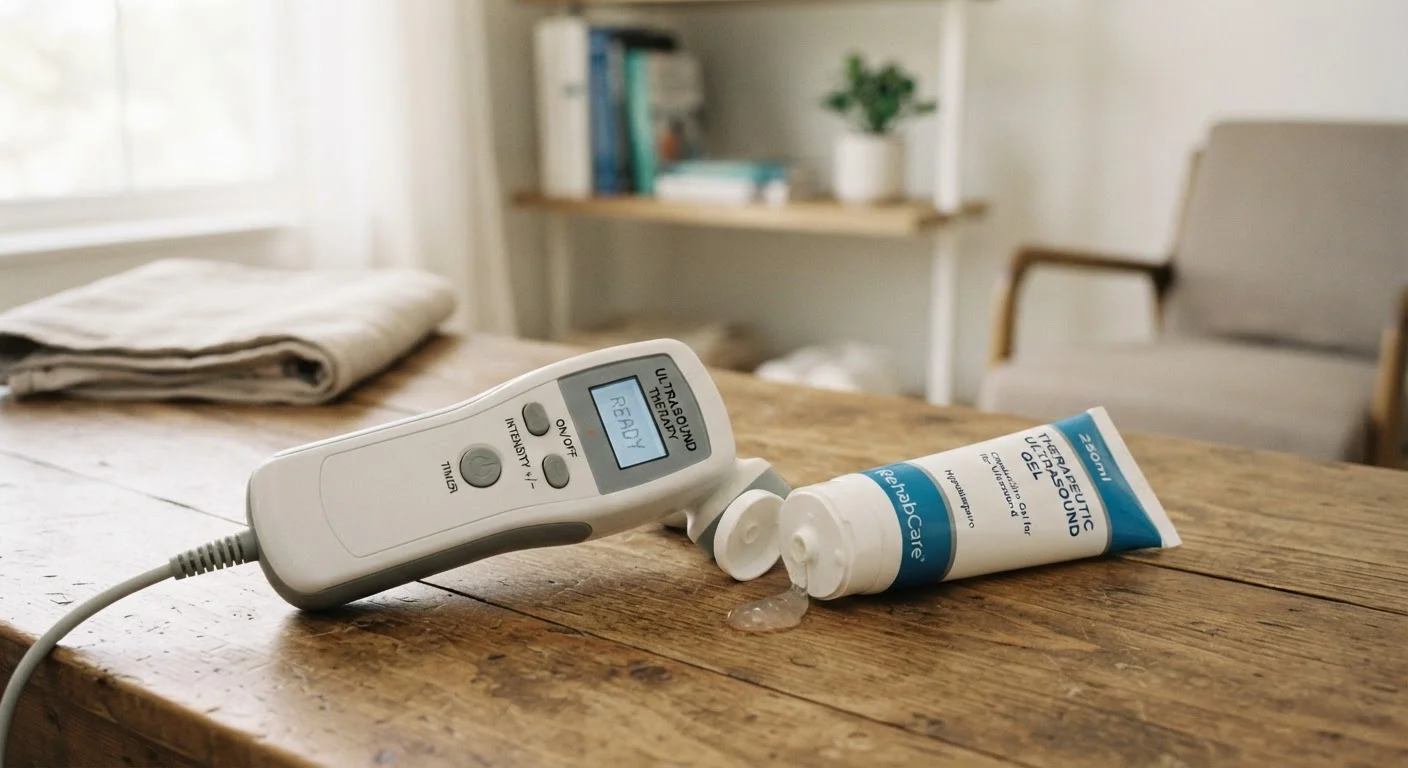
Therapeutic ultrasound devices generate high-frequency sound waves — typically between 1 and 3 megahertz (MHz) — through a piezoelectric crystal in the transducer head. When the transducer is moved over skin coated with coupling gel, these waves penetrate soft tissue and produce two types of effects: thermal effects, which involve a gentle, localized rise in tissue temperature, and non-thermal (mechanical) effects, which include acoustic streaming and cavitation that may influence cell membrane permeability and tissue repair processes.
In clinical settings, licensed physical therapists select frequency, intensity, and treatment duration based on the specific tissue, depth, and condition being treated. Home devices simplify these controls, often offering fixed or limited settings. Understanding this distinction helps set realistic expectations about what a home device can and cannot replicate. For a broader overview of therapeutic tools used at home, see Home Therapeutic Devices: A Family Reference Guide.
Myth
Home ultrasound devices work exactly the same way as the machines used in physical therapy clinics.
Fact
Home devices typically operate at lower intensity levels and smaller transducer heads than clinical units, limiting their depth of tissue penetration.
Clinical ultrasound therapy devices used by physical therapists are calibrated to precise output levels and are operated by trained practitioners who adjust parameters based on the specific tissue being targeted. Most consumer home devices are cleared by the FDA as general wellness or Class II medical devices — a designation that permits sale but does not confirm equivalence to professional-grade equipment. The lower wattage and fixed frequency settings on home units mean the mechanical and thermal energy delivered to deep tissue is meaningfully different from a clinical session.
Myth
If the FDA cleared it, the device must be proven to work.
Fact
FDA 510(k) clearance establishes that a device is substantially equivalent to a predicate device already on the market — it does not require proof of clinical effectiveness.
The FDA's 510(k) pathway, which most home therapeutic ultrasound devices go through, evaluates safety and substantial equivalence, not therapeutic efficacy. A cleared device has met a regulatory threshold for marketing, not a clinical threshold for treatment outcomes. Consumers should look beyond clearance status and ask whether independent peer-reviewed research supports the specific claims being made for a device. The two questions — "Is it safe to sell?" and "Does it work?" — have different answers under U.S. regulatory law.
Myth
More ultrasound sessions will always produce better or faster results.
Fact
Overuse of therapeutic ultrasound can cause tissue heating, minor burns, or other adverse effects — frequency and duration matter significantly.
Therapeutic ultrasound works through two primary mechanisms: thermal effects (gentle tissue heating) and non-thermal or mechanical effects (acoustic streaming and cavitation). Both can be beneficial within appropriate parameters, but exceeding recommended session lengths or applying the device to one area repeatedly without adequate rest may cause localized tissue irritation. Clinical protocols are designed around specific dose windows. Without professional guidance, replicating those windows at home is difficult. Following the manufacturer's usage instructions and discussing a schedule with a physical therapist is the safer approach.
Myth
Home ultrasound therapy is a well-proven treatment for chronic pain and sports injuries.
Fact
The research evidence is inconsistent — some studies show modest benefit for specific conditions, while systematic reviews highlight significant limitations in existing trials.
Several systematic reviews and Cochrane analyses have examined therapeutic ultrasound for conditions including musculoskeletal pain, tendinopathy, and soft tissue injuries. Findings are generally mixed: some trials report short-term improvements in pain and function, while others find no significant advantage over sham (placebo) treatments. Study quality issues — including small sample sizes, lack of blinding, and variable device parameters — make firm conclusions difficult. The evidence base for home devices specifically is even thinner, as most trials involve clinical settings. This does not mean home ultrasound is ineffective, but consumers should maintain realistic expectations rather than assuming proven efficacy.
Myth
Ultrasound gel is optional — any lotion or nothing at all will do.
Fact
Coupling gel is essential for effective ultrasound transmission; air between the transducer and skin blocks ultrasound waves almost entirely.
Ultrasound energy does not travel well through air. A water-based coupling medium — typically a clear, purpose-made gel — is required to create acoustic contact between the transducer head and the skin surface. Substituting with thick lotions, oils, or skipping the medium altogether significantly reduces energy transfer and may cause the transducer to heat up abnormally. Most home devices include or specify a compatible gel; using the recommended medium as directed is not optional, it is a functional requirement for safe and effective operation.
What the Research Actually Supports — and Where It Falls Short
The clinical literature on therapeutic ultrasound spans decades, but translating it to home device use requires caution. Studies conducted in supervised clinical environments, with calibrated equipment and trained operators, cannot be assumed to apply directly to consumer devices used independently at home.
Conditions where some evidence of benefit exists — such as certain tendinopathies and localized soft tissue pain — generally involve professionally administered protocols. The body of evidence for home-specific devices is limited. Families considering home ultrasound as part of a recovery plan should discuss it alongside other evidence-supported options. For context on how ultrasound compares to other recovery approaches, see The Complete Guide to Home Physical Recovery Devices.
Not a Substitute for Professional Care
Home ultrasound therapy devices are general wellness tools, not medical treatments. They should not replace diagnosis or treatment from a qualified healthcare professional. If you are recovering from a significant injury, surgery, or managing a chronic condition, consult your doctor or physical therapist before using any home therapeutic device.
Known Contraindications You Should Not Ignore
Therapeutic ultrasound should not be applied over areas with active malignancies, implanted electronic devices such as pacemakers, open wounds, growth plates in children, or during pregnancy. Applying ultrasound over these areas carries documented safety risks. Always read the manufacturer's contraindication list and discuss your personal health history with a clinician before use.
This article is for general informational purposes only and does not constitute medical advice. Always consult a qualified healthcare professional before starting any home therapy program.