
Liquid Medications and Dosing Tools: Why the Right Measuring Device Is Not Optional

Key Takeaways
- Kitchen spoons vary widely in volume and are not reliable for measuring liquid medicines.
- Oral syringes are generally the most accurate dosing tool for liquid medications, especially for children.
- All liquid medicine doses should be measured in milliliters (mL), not teaspoons.
- The dosing device included or recommended with a medication should always be used.
- Dosing errors with liquid medicines are a leading cause of preventable medication mistakes at home.
- When in doubt about correct dosing, consult a pharmacist before administering any medication.
Liquid Medication Dosing Tools
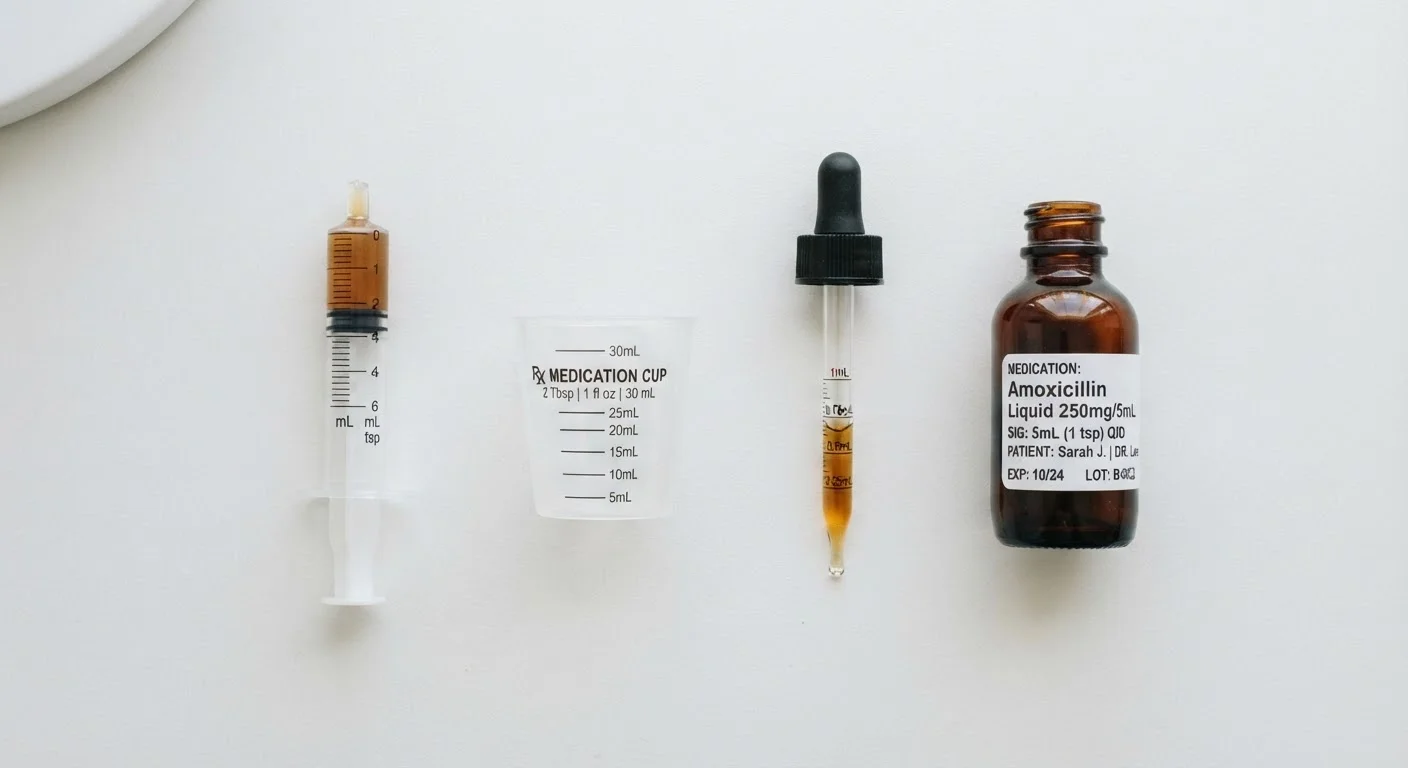
Liquid medication dosing tools are purpose-built devices — such as oral syringes, calibrated dosing cups, and droppers — designed to measure a precise volume of liquid medicine. Unlike household utensils, these tools are marked in milliliters (mL) and are engineered to the tolerances required for safe medication delivery. Using the correct device ensures the person taking the medicine receives exactly the intended dose.
The FDA and pediatric safety organizations recommend that all liquid medications be measured in milliliters (mL) rather than teaspoons or tablespoons to reduce unit-conversion errors.
Why Your Kitchen Spoon Is Not a Dosing Tool
It seems simple enough: the label says one teaspoon, so you reach for a spoon from the drawer. But that common household shortcut is one of the most frequent contributors to liquid medication errors at home. Research consistently shows that kitchen spoons — whether teaspoons, dessertspoons, or tablespoons — vary significantly in the actual volume they hold. A household teaspoon can measure anywhere from 2.5 mL to more than 7 mL, a range large enough to cause under-dosing or overdosing depending on the medication.
For most adults taking a large dose of a relatively low-risk supplement, this variability might matter little. But for children's medications, concentrated liquid formulas, or any drug with a narrow therapeutic window — meaning the gap between a helpful dose and a harmful one is small — this kind of imprecision is genuinely dangerous.
The most overlooked medication mistakes often aren't dramatic errors; they're small, repeated miscalculations that accumulate. Using the wrong measuring tool is exactly that type of mistake.
2.5–7+ mL
Volume range of household teaspoons
Studies measuring common household spoons found volumes ranging from under 3 mL to well over 6 mL — far outside the intended 5 mL 'teaspoon' dose.
~41%
Caregivers using incorrect dosing devices
A peer-reviewed study published in Pediatrics found that a significant share of caregivers used non-standard measuring tools when dosing liquid children's medications.
1 in 5
Pediatric medication errors involve liquid dosing
The American Academy of Pediatrics notes that liquid medication measurement errors are among the most common preventable medication mistakes in home settings.
Choosing the Right Measuring Device
Pharmacies and manufacturers provide specific dosing devices because they are calibrated to the volumes printed on medication labels. Understanding what each device is designed for helps families make the right choice.
- Oral syringes: The gold standard for measuring liquid medicines, especially for infants and young children. Oral syringes draw up a precise volume, are measured in mL, and deliver medication directly into the mouth with minimal waste. They are designed so they cannot accidentally connect to IV lines, making them a safer option in clinical and home settings alike.
- Calibrated dosing cups: Appropriate for larger volumes and older children or adults who can hold a cup steady and read the markings. Always check that the graduation lines (the measurement marks) are easy to read at eye level before using.
- Calibrated droppers: Typically provided with concentrated infant drops. The dropper should only be used with the specific medication it came with — droppers from different products are not interchangeable because their bore sizes differ.
If the original device is lost or damaged, ask your pharmacist for a replacement before administering the next dose. Most pharmacies will provide an oral syringe at no cost. See our medication safety checklist for a step-by-step approach to reviewing your medicine cabinet before restocking.
Ask Your Pharmacist for a Free Oral Syringe
If a liquid medication does not come with a dosing device, or if you've misplaced the original, ask your pharmacist for an oral syringe. Most pharmacies keep a supply on hand and will provide one at no charge. Make sure it is calibrated in mL and sized appropriately for the dose you need to measure.
Reading the Dose Correctly Every Time
Having the right device is only half the task — using it correctly matters just as much. A few practical habits reduce the chance of error:
- Always measure in mL. If a label lists a dose in teaspoons, confirm the mL equivalent on the same label or package insert. The FDA advises that all liquid pediatric medications now include mL dosing on labels to reduce conversion errors.
- Read at eye level. When using a dosing cup, set it on a flat surface and crouch down so the measurement line is at eye level. Reading from above causes parallax error, making a lower fill look higher than it is.
- Draw to the correct line on an oral syringe. Pull the plunger slowly and stop exactly at the mL mark for the prescribed dose. Do not estimate between lines.
- Check the concentration. Liquid medications come in different concentrations — the amount of drug per mL can vary between formulations. Never assume that switching brands or formulations means the same volume delivers the same dose. Confirm with your pharmacist.
For a broader look at safe measurement practices across all medications, the safe dosing practices every family should know is a useful companion resource.
Special Considerations for Children and High-Risk Situations
Children are particularly vulnerable to liquid dosing errors because their doses are weight-based and the volumes involved are small. A 1 mL error in a 5 mL pediatric dose represents a 20% deviation — clinically significant for many medications. Caregivers should always confirm the correct dose with a pediatrician or pharmacist rather than estimating by age or appearance alone.
Certain situations call for extra vigilance:
- Concentrated drops for infants: These are formulated at higher concentrations precisely because infants take small volumes. Never use infant drops interchangeably with children's liquid formulations of the same medication — the concentration difference can cause accidental overdose.
- Multiple caregivers in one household: When more than one adult administers medication — parents, grandparents, babysitters — establish a clear log so no dose is accidentally doubled.
- Over-the-counter combination products: Some liquid cough and cold formulas contain multiple active ingredients. Giving two products simultaneously can duplicate ingredients and exceed safe limits.
If you are ever uncertain about a dose for a child, elderly family member, or someone with a chronic condition, consult a pharmacist or healthcare provider before proceeding. The complete family medication safety guide covers these scenarios in greater depth.
This article is for general informational and educational purposes only and does not constitute medical advice. Always consult a qualified healthcare professional — including your pharmacist or physician — for guidance specific to your situation or your family's health needs.