

Key Takeaways
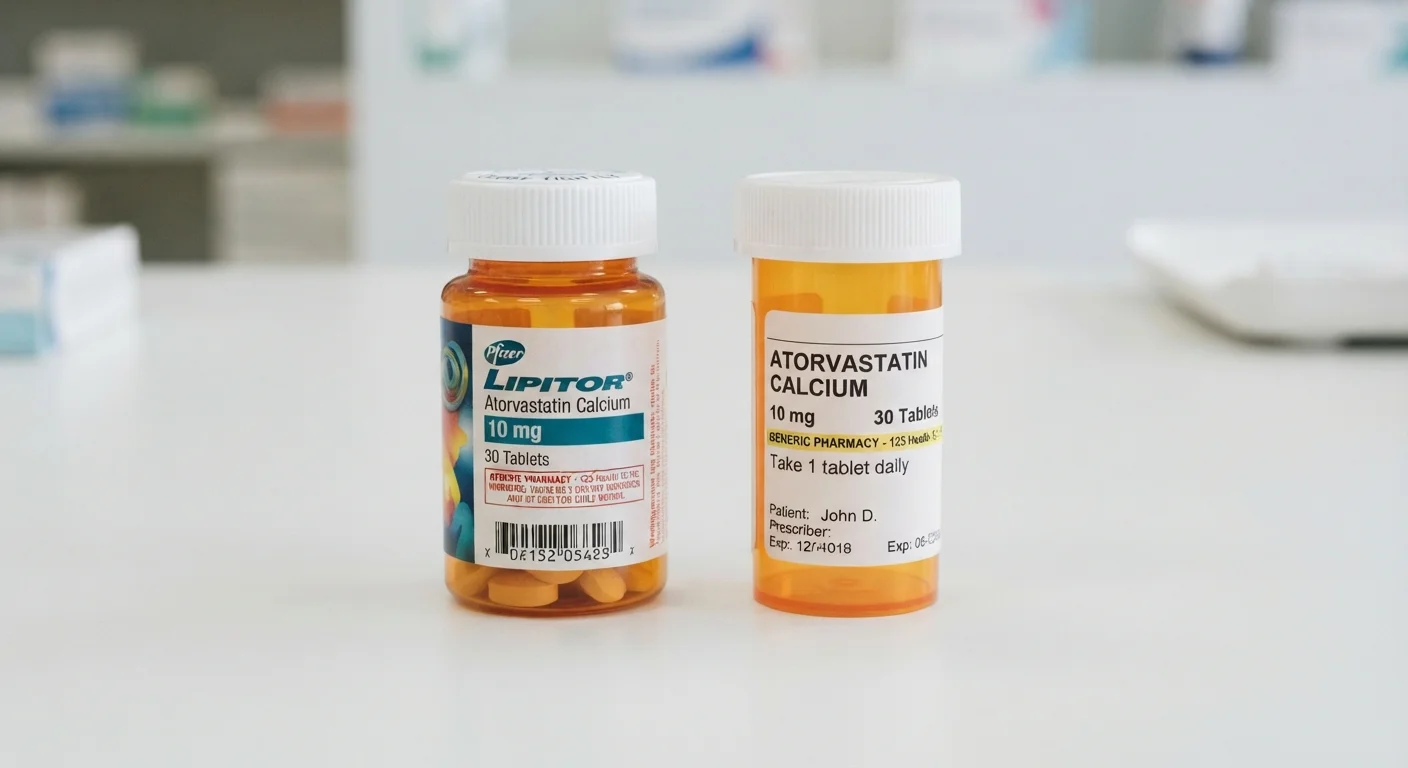
- Generic drugs contain the same active ingredient, strength, and dosage form as their brand-name counterparts.
- The FDA requires generics to demonstrate bioequivalence before they can be approved and dispensed.
- Inactive ingredients like fillers and dyes can differ between brand and generic versions.
- For most medications, generics are a therapeutically equivalent option supported by regulatory science.
- Some narrow therapeutic index drugs may warrant closer monitoring when switching formulations.
- Always consult your pharmacist or prescriber before switching between a brand and generic version.
Option A
Brand-Name Medications
The original, innovator-developed formulation.
Best for: Patients whose prescribers or clinical situations specifically require the original manufacturer's product.
Option B
Generic Medications
The FDA-approved, therapeutically equivalent alternative.
Best for: Most patients seeking the same active ingredient at a typically lower out-of-pocket cost.
If you want cost-effective therapy for common conditions
Generic Medications
Generics are FDA-approved as bioequivalent and are widely accepted for routine prescriptions, typically at a lower cost to the patient.
If your prescriber has specified a brand-name product for clinical reasons
Brand-Name Medications
Some clinical situations — including certain narrow therapeutic index drugs — may call for the original formulation as determined by your healthcare provider.
If you or a family member has known sensitivities to inactive ingredients
Brand-Name Medications
Inactive ingredients such as dyes, fillers, or preservatives can differ, so patients with specific sensitivities should discuss formulation options with their pharmacist.
If managing multiple prescriptions on a tight household budget
Generic Medications
Generics meet the same federal standards for safety and efficacy, making them a practical choice when affordability is a priority for families.
What Makes a Drug Generic or Brand-Name?
When a pharmaceutical company develops a new drug, it receives patent protection that gives it the exclusive right to sell that medication under a brand name. During this period, no other manufacturer can produce the same drug. Once the patent expires, other companies may apply to the FDA to manufacture and sell a generic version — a copy of the original that uses the same active ingredient.
The active ingredient is the chemical compound that produces the drug's therapeutic effect. The FDA requires that a generic drug contain the identical active ingredient, in the same amount and dosage form (tablet, capsule, liquid, etc.), as the brand-name product. What can differ are inactive ingredients — things like binders, fillers, colorants, and coatings that affect appearance or how the tablet holds together, but are not supposed to alter therapeutic effect for most people.
For a plain-language overview of how prescription and non-prescription drugs are categorized and regulated, see our guide on OTC vs. prescription medications.
How the FDA Evaluates Generic Equivalence
The FDA's approval pathway for generics centers on a concept called bioequivalence. A drug is considered bioequivalent to its brand-name reference if it delivers the same amount of active ingredient into the bloodstream at approximately the same rate under the same conditions. Manufacturers must submit study data to the FDA demonstrating this before a generic can be approved and dispensed in the U.S.
| Criterion | Brand-Name | Generic |
|---|---|---|
| Active ingredient | Original compound | Identical compound, same dose |
| FDA approval standard | Full clinical trial data | Bioequivalence to brand |
| Inactive ingredients | Proprietary formulation | May differ (fillers, dyes) |
| Appearance | Brand-specific color/shape | Can look different legally |
| Typical out-of-pocket cost | Generally higher | Generally lower |
| Therapeutic effect | Established by originator trials | Equivalent for most patients |
| NTI drug considerations | Original reference product | May require prescriber guidance |
FDA standards allow for an acceptable range of variation in bioavailability — generally within roughly 80–125% of the reference drug's exposure metrics. This range is designed to account for normal biological variability, the same variability that occurs between two doses of the same brand-name drug taken by the same person on different days. For the vast majority of medications, this range has no meaningful clinical impact.
To understand more about how bioequivalence standards are applied in practice, our deeper look at separating fact from assumption on generics explores the evidence in detail.
Where Real Differences Can Matter
For the majority of prescription medications, switching from brand to generic — or between generics — has no clinically meaningful effect. However, there are specific categories where closer attention is warranted.
Narrow therapeutic index (NTI) drugs are medications where a small difference in blood concentration can lead to either toxicity or loss of effectiveness. Examples include certain anticoagulants, antiepileptics, and thyroid hormones. For patients stable on one formulation of these drugs, their prescriber or pharmacist may recommend staying on the same product — brand or generic — rather than switching.
Inactive ingredient sensitivities are another consideration. A small number of patients may react to specific dyes, lactose, gluten, or other excipients present in one formulation but not another. If a family member has known allergies or intolerances, it is worth reviewing the inactive ingredient list with your pharmacist.
A Note on Narrow Therapeutic Index Drugs
Drugs like warfarin, levothyroxine, and certain antiepileptics require precise blood-level control. If you or a family member takes one of these medications, do not switch between brand and generic — or between different generics — without first speaking to your prescriber or pharmacist. Routine monitoring may be recommended after any formulation change.
If your family is managing complex medication regimens, understanding drug interactions is a helpful companion topic to review with your care team.
Practical Guidance for Families at the Pharmacy
When you pick up a prescription, your pharmacist may automatically dispense a generic unless your prescriber writes "dispense as written" (DAW) on the prescription. In most U.S. states, pharmacists are permitted — and often encouraged — to substitute an FDA-approved generic for a brand-name drug unless the prescriber or patient requests otherwise.
Here are a few practical steps families can take:
- Ask your pharmacist whether a generic is available and whether there are any clinical reasons to prefer the brand in your specific situation.
- Check inactive ingredients if anyone in your household has known sensitivities — your pharmacist can pull this information from the drug's labeling.
- Let your prescriber know if you or a family member experiences any unexpected changes after switching formulations, particularly for NTI medications.
- Understand your insurance coverage, as formularies often tier brand and generic drugs differently — your pharmacist can help clarify what applies to your plan.
For context on how prescriptions are issued and managed, our overview of prescription formats explains what to expect at each step.
This article is for general informational purposes only and does not constitute medical or pharmaceutical advice. Always consult a licensed pharmacist or healthcare provider before making decisions about your medications or those of your family members.