

Key Takeaways
- Endometriosis is fueled by estrogen and affects an estimated 1 in 10 women of reproductive age.
- Misplaced tissue responds to monthly hormonal cycles, causing inflammation and pain outside the uterus.
- Relative progesterone resistance may explain why endometriosis persists and progresses in some women.
- Diagnosis is frequently delayed by years due to symptom normalization and limited awareness.
- Hormonal therapies work by suppressing estrogen or the menstrual cycle, not by curing the condition.
- Symptoms and disease severity do not always correlate — some women with minimal lesions have severe pain.
Endometriosis and Hormones
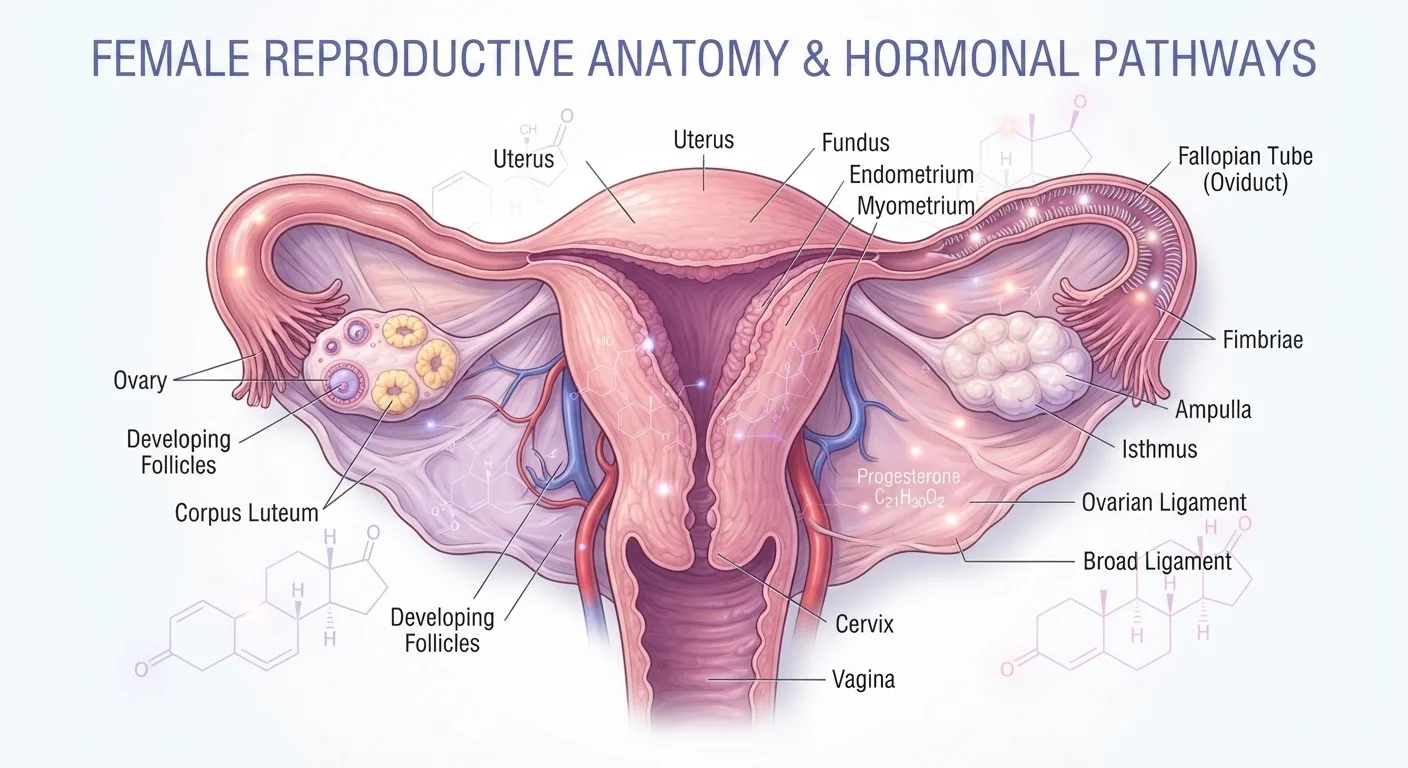
Endometriosis is a chronic condition in which tissue similar to the uterine lining grows outside the uterus — on the ovaries, fallopian tubes, or elsewhere. This tissue responds to the same hormonal signals as the uterine lining itself, swelling and breaking down with each menstrual cycle. Because estrogen is the primary hormone that stimulates this tissue growth, endometriosis is often described as an estrogen-dependent condition.
Research suggests that women with endometriosis may also show relative progesterone resistance, meaning the tissue does not respond normally to progesterone's counterbalancing effect on estrogen — a factor that may drive inflammation and disease progression.
Why Estrogen Sits at the Center of Endometriosis
Endometriosis is not simply a uterine problem — it is, at its core, a hormonally driven disease. The tissue that grows outside the uterus contains the same estrogen receptors found in the uterine lining, making it responsive to the hormonal fluctuations of the menstrual cycle. Each month, rising estrogen levels stimulate this misplaced tissue to grow. When estrogen drops before menstruation, the tissue attempts to shed — but unlike normal uterine tissue, it has nowhere to go. The result is localized bleeding, inflammatory responses, and over time, the formation of adhesions and scar tissue.
Understanding how estrogen and progesterone interact is essential context here. Normally, progesterone acts as a counterweight to estrogen — moderating its proliferative effect on uterine-like tissue. In many women with endometriosis, however, this balance is disrupted. Research published in reproductive medicine literature indicates that endometriotic lesions may exhibit progesterone resistance, limiting the hormone's ability to suppress tissue activity. This means estrogen's stimulating effects go relatively unchecked, potentially driving both pain and disease progression.
Endometriosis Is Not the Same as PCOS
Both endometriosis and polycystic ovary syndrome (PCOS) are hormonally influenced conditions, but they involve different hormonal mechanisms and disease processes. Endometriosis is primarily estrogen-driven, while PCOS typically involves androgen excess and insulin resistance. The two conditions can coexist, but they require different diagnostic and management approaches. See our article on conditions that are often confused with endometriosis for further clarity.
The Monthly Cycle as a Driver of Symptoms
For women with endometriosis, the monthly hormonal cycle is not a neutral biological event — it is a recurring trigger. As estrogen rises during the follicular phase, endometriotic implants grow and become more active. Inflammation intensifies around menstruation, when those implants attempt to break down. The pain this causes — often dismissed as severe period cramps — can affect the pelvis, bowel, bladder, and lower back.
It is clinically important to recognize that the degree of pain does not reliably indicate the extent of disease. Some women with minimal visible lesions report debilitating symptoms; others with widespread endometriosis experience relatively mild discomfort. This disconnect makes the condition harder to diagnose on symptom assessment alone and underscores the importance of investigating symptoms that consistently worsen at specific points in the cycle. For a broader look at how each phase of the menstrual cycle functions, that foundational knowledge helps place endometriosis in context.
1 in 10
Women of reproductive age affected by endometriosis
According to the World Health Organization, endometriosis affects an estimated 190 million women and girls of reproductive age globally.
7–10 years
Average delay from symptom onset to diagnosis
Multiple studies across different countries consistently report a diagnostic delay of seven to ten years, driven by symptom normalization and limited clinical awareness.
~40%
Of women with infertility who have endometriosis
Research estimates that endometriosis is present in approximately 25–40% of women investigated for infertility, underscoring its broader reproductive impact.
Why Diagnosis Takes So Long
One of the most persistent problems in endometriosis care is a diagnostic delay that, according to multiple population studies, averages between seven and ten years from symptom onset. Several hormonal and cultural factors contribute to this gap. Cyclical pain is frequently normalized — by patients, families, and sometimes clinicians — as an expected feature of menstruation. The condition shares symptom overlap with irritable bowel syndrome, pelvic inflammatory disease, and other diagnoses, complicating the clinical picture.
Because symptoms fluctuate with the hormonal cycle, they may not be present or measurable at every clinical visit. Women may also internalize the idea that severe menstrual pain is normal, delaying the moment they seek evaluation. This issue of dismissed hormonal symptoms is examined in depth in why hormonal symptoms are sometimes dismissed and how to navigate that. Awareness — both among patients and providers — remains one of the most critical levers for improving outcomes.
Hormonal Treatments: How They Work and What They Don't Do
Because endometriosis is estrogen-dependent, many treatment strategies focus on reducing estrogen stimulation or suppressing the menstrual cycle altogether. Combined hormonal contraceptives, progestin-only therapies, and gonadotropin-releasing hormone (GnRH) agonists or antagonists are all used to limit the monthly hormonal fluctuations that drive tissue activity. These approaches can reduce pain and slow lesion growth in many individuals.
However, it is important to understand what hormonal management does not do: it does not remove existing lesions, restore organs affected by adhesions, or provide a permanent cure. Symptoms often return when treatment is discontinued. Surgical options, typically laparoscopy performed by a specialist, can physically remove lesions but also carry recurrence risk. The approach most appropriate for any individual depends on symptom severity, fertility goals, and other health factors — decisions that should be made collaboratively with a healthcare provider. Women with endometriosis approaching later reproductive years may also wish to discuss how changes during perimenopause may affect their condition, since declining estrogen can alter the disease's behavior.
This article is for general informational purposes only and does not constitute medical advice. If you are experiencing symptoms that may be consistent with endometriosis, please consult a qualified healthcare professional for evaluation and guidance.