

Key Takeaways
- Endometriosis grows outside the uterus; adenomyosis grows into the uterine muscle wall.
- Both conditions can cause painful periods and fertility challenges, but their symptom profiles differ.
- Adenomyosis is more reliably detected via imaging; endometriosis often requires surgical diagnosis.
- Both conditions can coexist in the same person simultaneously.
- Treatment depends on symptom severity, fertility goals, and which condition is present.
Option A
Endometriosis
Tissue outside the uterus causing widespread pelvic pain.
Best for: Understanding a condition where endometrial-like tissue grows beyond the uterine wall, often affecting the ovaries, fallopian tubes, and pelvic lining.
Option B
Adenomyosis
Uterine tissue embedded within the muscle wall itself.
Best for: Understanding a condition where the endometrial lining grows into the myometrium (uterine muscle), commonly causing heavy bleeding and an enlarged uterus.
If you experience severe pelvic pain throughout your cycle with possible bowel or bladder symptoms
Endometriosis
Pain extending beyond menstruation, especially involving the bowel or bladder, is more characteristic of endometriosis. A specialist evaluation including possible laparoscopy is warranted.
If you have consistently heavy periods and a noticeably enlarged or tender uterus
Adenomyosis
Heavy menstrual bleeding paired with uterine enlargement points more strongly to adenomyosis, which a gynecologist can often assess with ultrasound or MRI.
If you are experiencing unexplained infertility alongside pelvic pain
Endometriosis
Endometriosis is more strongly associated with impaired fertility due to its effects on the ovaries and fallopian tubes. Early specialist referral is advised.
If your symptoms emerged or worsened after childbirth or a uterine procedure
Adenomyosis
Adenomyosis is more prevalent in people who have had prior pregnancies or uterine surgery, making it the more likely diagnosis in this context.
What Sets These Two Conditions Apart
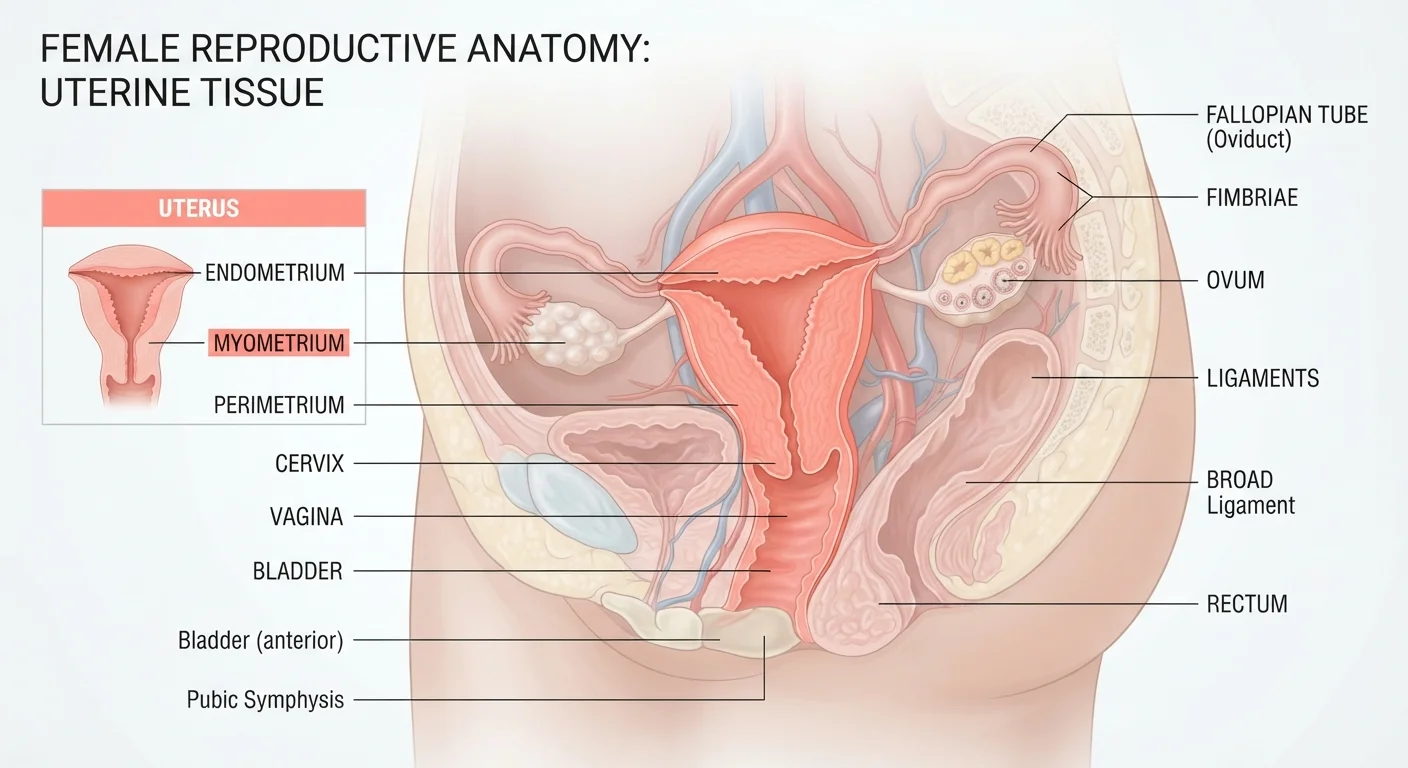
Endometriosis and adenomyosis are both disorders involving tissue that resembles the endometrium — the lining of the uterus — growing somewhere it shouldn't. That shared characteristic is the source of much confusion. However, location is the critical distinction.
In endometriosis, endometrial-like tissue implants and grows outside the uterus entirely. Common sites include the ovaries, fallopian tubes, the peritoneum (the lining of the pelvic cavity), and sometimes more distant structures such as the bowel or bladder. These implants respond to hormonal cycles, causing inflammation, scarring, and adhesions.
In adenomyosis, the endometrial lining invades inward, embedding itself within the myometrium — the muscular wall of the uterus itself. This causes the uterus to thicken and often enlarge, disrupting normal muscle contractions and blood flow during menstruation.
Understanding this anatomical difference matters enormously for diagnosis, imaging, and treatment planning. To explore how hormonal drivers specifically fuel endometriosis, see our deep dive on endometriosis and hormones.
| Criterion | Endometriosis | Adenomyosis |
|---|---|---|
| Tissue location | Outside the uterus | Within the uterine muscle wall |
| Primary symptom | Chronic pelvic pain, dyspareunia | Heavy menstrual bleeding, uterine heaviness |
| Fertility impact | Strongly associated with infertility | May affect fertility; less studied |
| Uterine size | Typically normal | Often enlarged |
| Diagnosis method | Laparoscopy (gold standard) | Ultrasound or MRI |
| Common in | Reproductive-age women | Often those in their 40s or after pregnancy |
| Hormonal therapy response | Yes, commonly used | Yes, commonly used |
Symptoms: Overlapping but Not Identical
Both conditions share hallmark symptoms — dysmenorrhea (painful periods) and chronic pelvic pain — which is why they are so frequently conflated or misdiagnosed. However, their symptom profiles diverge in important ways.
Endometriosis tends to produce pain that extends throughout the menstrual cycle rather than being confined to menstruation alone. Deep dyspareunia (pain during intercourse), pain with bowel movements or urination, and fatigue are frequently reported. Fertility difficulties are a major concern, affecting an estimated 30–50% of people with the condition, according to the American College of Obstetricians and Gynecologists (ACOG).
Adenomyosis more characteristically presents with heavy menstrual bleeding (menorrhagia), prolonged periods, and a sensation of pelvic pressure or a feeling of uterine heaviness. The uterus may feel tender on examination. While pelvic pain is present, it tends to be most pronounced during menstruation rather than throughout the cycle.
30–50%
Endometriosis patients with fertility difficulties
According to ACOG, endometriosis is found in approximately 30–50% of individuals experiencing infertility.
~7 years
Average diagnostic delay for endometriosis
Multiple studies and patient advocacy data consistently indicate an average delay of approximately seven years from symptom onset to endometriosis diagnosis.
Up to 20%
Estimated prevalence of adenomyosis
Adenomyosis is estimated to affect up to 20% of people with a uterus, though prevalence data varies based on diagnostic criteria used.
It is important to note that both conditions can coexist — research suggests a meaningful overlap — and one diagnosis does not exclude the other. Anyone experiencing these symptoms should consult a qualified healthcare provider for thorough evaluation rather than self-diagnosing.
Diagnosis and Treatment Pathways
Diagnosing adenomyosis has become more accessible with advances in imaging. Transvaginal ultrasound and pelvic MRI can identify characteristic changes within the uterine wall, though definitive histological confirmation has traditionally required examination of uterine tissue. In clinical practice, imaging combined with symptom history guides most treatment decisions.
Diagnosing endometriosis remains more challenging. While MRI and ultrasound can detect larger lesions — particularly endometriomas (ovarian cysts filled with old blood) — the gold standard remains laparoscopy, a minimally invasive surgical procedure allowing direct visualization and biopsy of lesions. This contributes to an often-cited diagnostic delay of several years from symptom onset.
Treatment for both conditions is tailored to symptom severity and reproductive goals. Hormonal therapies, including combined oral contraceptives and progestins, are commonly used to manage symptoms in both. Surgical intervention — ranging from lesion excision to, in select cases, hysterectomy — may be considered when other approaches are insufficient. For broader context on managing uterine conditions, our overview of treatment paths for uterine fibroids illustrates how similar decision-making frameworks apply across conditions.
These Conditions Can Coexist
Research indicates that endometriosis and adenomyosis frequently occur together in the same individual. A diagnosis of one should not lead clinicians or patients to rule out the other. If symptoms remain poorly controlled after treatment targeting one condition, a thorough evaluation for both is appropriate. Discuss any ongoing or unresolved symptoms with your gynecologist.
This article is for informational purposes only and does not constitute medical advice. Always consult a qualified healthcare professional for evaluation, diagnosis, and personalized treatment recommendations.