

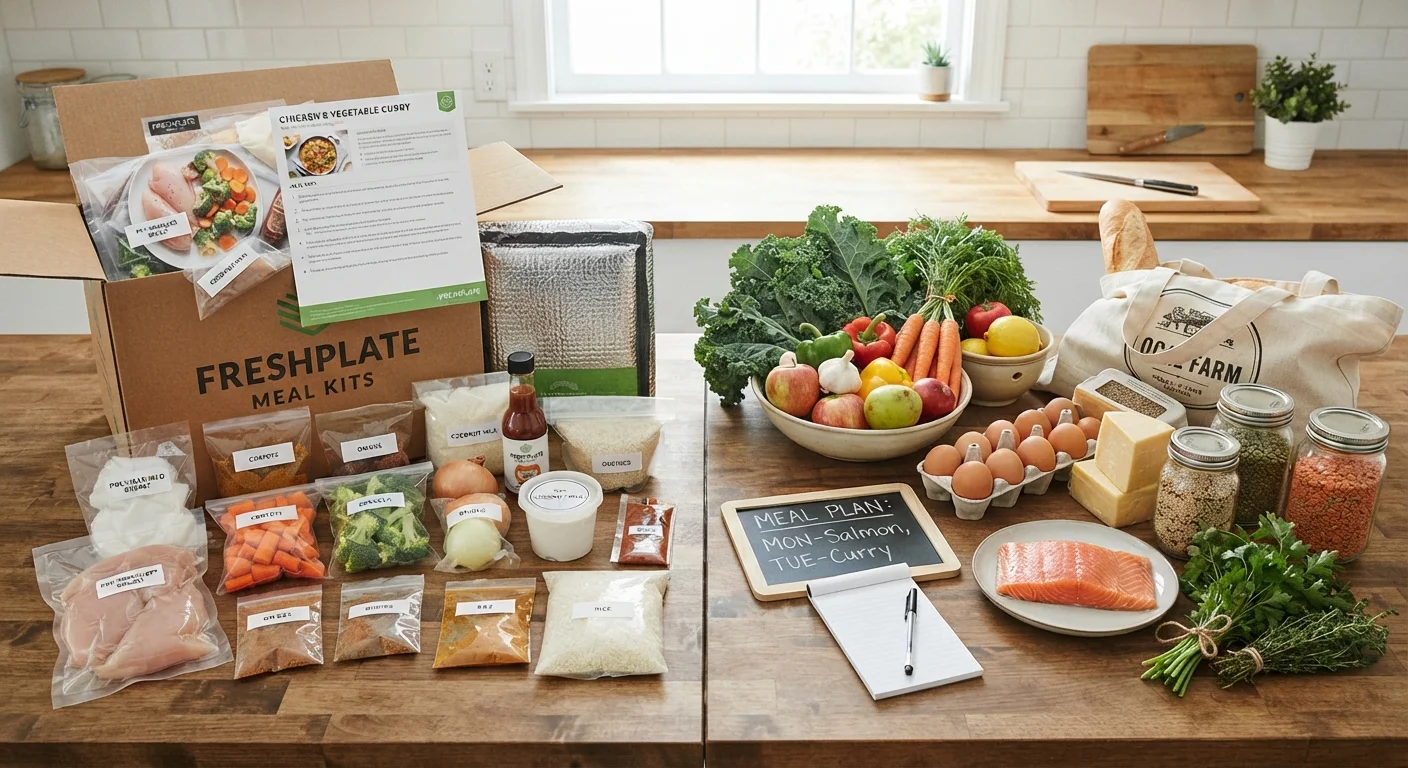
Key Takeaways
- Meal kits reduce decision fatigue but typically cost more per serving than self-planned meals.
- Self-planned meals give families full control over ingredients, portions, and nutritional balance.
- Meal kits can generate significant packaging waste compared to buying in bulk or at a market.
- Both approaches can support a nutritious diet when used thoughtfully and intentionally.
- Hybrid strategies — using meal kits selectively alongside traditional planning — work well for many families.
Reduces planning time and decision fatigue
Meal kits arrive with a pre-selected recipe and exact ingredients, eliminating the need to plan menus or build shopping lists — a significant benefit for time-constrained households.
Introduces dietary variety and new ingredients
Services routinely feature diverse cuisines and seasonal ingredients that families may not otherwise cook, supporting a broader nutritional profile over time.
Pre-portioned ingredients reduce over-buying
Exact quantities mean you're less likely to purchase a full package of an ingredient you only need a small amount of, reducing the risk of ingredient-level food waste.
Supports cooking skill development
Recipe cards typically include technique guidance that can build kitchen confidence, particularly for adults or teens learning to cook from scratch.
Higher per-serving cost than grocery-bought meals
Meal kits generally cost significantly more per serving than equivalent meals planned and shopped for independently, which adds up substantially for families over weeks and months.
Significant packaging waste per delivery
Each kit typically involves multiple plastic pouches, insulated packaging, and ice packs that are difficult to recycle consistently, creating a higher environmental footprint.
Less control over sodium and macronutrient content
Recipe formulations are designed for flavor and convenience, and some meals contain higher sodium or saturated fat levels than a dietitian-planned home-cooked equivalent.
Limited adaptability for dietary restrictions
Families managing allergies, intolerances, or medically prescribed diets may find meal kit menus restrictive, with fewer options to substitute ingredients safely.
Subscription models can create budget unpredictability
Auto-renewing plans require active management to pause or cancel, and skipping weeks is not always straightforward, which can create unintended ongoing expenses.
Our Verdict
Meal kits offer a genuinely convenient entry point for busy households and can introduce nutritional variety, but they come at a higher per-serving cost and produce more packaging waste. Self-planned meals deliver greater control over ingredients, budget, and portions — but require consistent time and skill to execute well. Neither approach is universally superior; the best outcomes often come from combining both strategically.
Meal kits suit time-pressed families or those building cooking confidence, while self-planned meals are ideal for households prioritizing budget control and full nutritional oversight.
Understanding What Each Approach Actually Involves
Meal kit services deliver pre-portioned ingredients and recipe cards directly to your door, handling sourcing and measurement on your behalf. Self-planned meals, by contrast, involve choosing recipes independently, creating a shopping list, and purchasing ingredients — tasks that require more upfront effort but also more flexibility.
It's worth noting that these are not all-or-nothing choices. Many families use meal kits a few nights per week while self-planning the rest. For a structured approach to self-planning, building a realistic weekly dinner plan can serve as a useful reference. Understanding the trade-offs across nutrition, cost, and practicality helps families decide how to allocate each approach in their routine.
Nutritional Control: What the Evidence Suggests
One commonly cited concern about meal kits is sodium content. Research published in nutrition journals has noted that some meal kit recipes contain sodium levels comparable to restaurant meals, though this varies widely by provider and recipe selection. Self-planned meals give families complete transparency — you choose every ingredient and can adjust seasonings, fats, and portion sizes to meet specific dietary needs.
That said, meal kits can offer a nutritional advantage in one respect: they reliably introduce diverse ingredients and cuisines that families might not otherwise cook, supporting dietary variety. For households with children, this kind of structured exposure to new foods supports broader nutritional intake. Involving children in the meal planning process — whether selecting a kit recipe or helping build a grocery list — can amplify those benefits regardless of which approach you use.
Nutritional Labels and Meal Kits
Most meal kit services publish nutritional information per serving for each recipe, which can be helpful for households tracking macronutrients or managing specific health conditions. However, values can shift depending on how much oil, salt, or sauce is added during cooking. If precise nutritional tracking matters for your family's health goals, factor in real-time adjustments when preparing kits. Always consult a registered dietitian for medically specific dietary needs.
Cost, Waste, and Practical Sustainability
On a per-serving basis, meal kits typically cost considerably more than equivalent meals prepared from scratch using grocery-bought ingredients. The premium reflects convenience, packaging, and logistics. For families managing tight budgets, the long-term cost difference is significant.
Food waste is a more nuanced comparison. Meal kits eliminate the problem of buying a full bunch of herbs for a teaspoon, but generate substantial packaging waste — ice packs, insulated liners, and individual plastic pouches. Grocery shopping for self-planned meals can produce more ingredient waste if planning is inconsistent, but using a structured weekly checklist before shopping minimizes waste effectively.
~$9–$12
Average meal kit cost per serving
Industry estimates consistently place meal kit per-serving costs between $9 and $12, compared to $3–$5 for equivalent home-cooked meals using grocery-store ingredients.
30–40%
Household food waste from poor planning
Research from the USDA estimates that US households waste roughly 30–40% of the food supply, much of which stems from unplanned purchasing and inconsistent meal preparation.
Time investment is the other practical factor. Meal kits reduce planning and grocery time but don't significantly reduce cooking time. Self-planned meals require an upfront planning effort, though approaches like batch cooking can redistribute that workload across the week more efficiently.
Making an Informed Choice for Your Household
Families new to structured meal planning may find meal kits a useful scaffold — they build cooking skills and recipe familiarity before transitioning to independent planning. Those with established routines and confidence in the kitchen are likely to find self-planning more cost-effective and nutritionally tailored. The foundational concepts of family meal planning apply equally to both approaches: balance, variety, and consistency matter more than the sourcing method.
Adults managing specific health conditions or seniors with particular nutritional needs should always consult a registered dietitian or healthcare provider when making significant changes to their eating patterns. This article provides general informational context and is not a substitute for professional dietary guidance.
This article is for informational purposes only and does not constitute medical or dietary advice. Please consult a qualified healthcare professional for personalized nutrition guidance.