

Key Takeaways
- Pulse oximeters estimate blood oxygen saturation (SpO2) non-invasively using light absorption.
- A normal SpO2 reading for a healthy adult typically falls between 95% and 100%.
- Readings below 90% are generally considered a medical concern requiring prompt attention.
- Factors like skin tone, nail polish, and poor circulation can affect reading accuracy.
- Home oximeters are useful for tracking trends, but a single number rarely tells the full story.
- Always consult a healthcare provider to interpret readings in the context of your health.
Pulse Oximeter
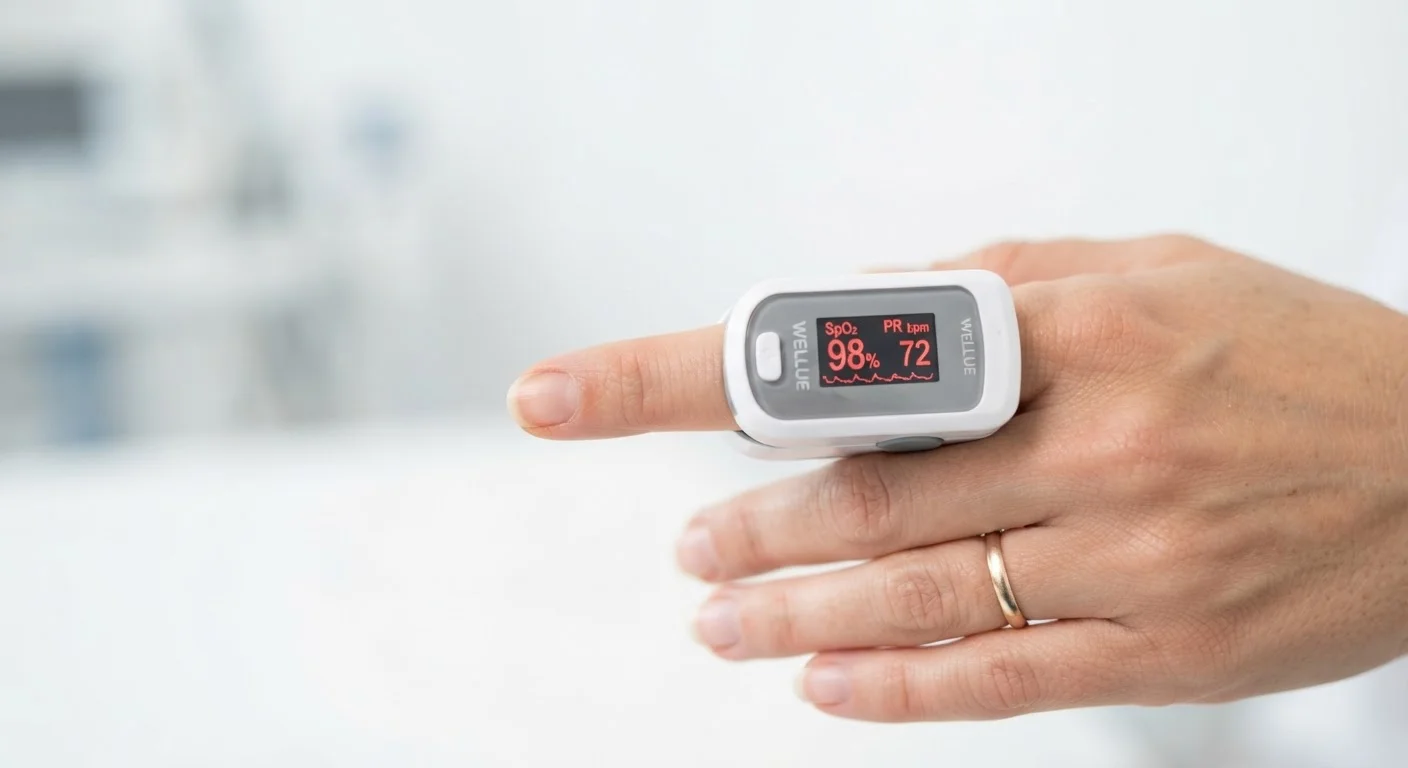
A pulse oximeter is a small, non-invasive device that clips onto a fingertip — or sometimes an earlobe or toe — and estimates how much oxygen your red blood cells are carrying. It reports this as a percentage called oxygen saturation, abbreviated SpO2. The device works by shining light through your skin and measuring how that light is absorbed by your blood.
SpO2 stands for peripheral oxygen saturation measured by pulse oximetry; it is an estimate of arterial oxygen saturation (SaO2) rather than a direct blood-gas measurement.
The Science Behind the Clip
A pulse oximeter exploits a fundamental property of blood: oxygenated hemoglobin and deoxygenated hemoglobin absorb light differently. The device contains two small light-emitting diodes — one emitting red light at roughly 660 nanometers and one emitting infrared light at around 940 nanometers. These shine through the tissue of your fingertip to a photodetector on the other side.
Oxygenated hemoglobin absorbs more infrared light and lets more red light pass through. Deoxygenated hemoglobin does the opposite. The device's processor analyzes the ratio of these absorption levels and converts it into an SpO2 percentage — the estimated proportion of hemoglobin molecules currently bound to oxygen.
Critically, the device also filters out the signal from arterial blood specifically by detecting the pulsatile (rhythmic with heartbeat) component of the light signal. This is why it also reports a pulse rate and why it needs good circulation to function well.
SpO2 Is an Estimate, Not a Direct Measurement
Pulse oximetry calculates oxygen saturation indirectly from light absorption ratios. The gold standard for measuring blood oxygen is arterial blood gas (ABG) analysis, performed in a clinical setting. For most routine monitoring purposes, pulse oximetry is sufficient, but in critical care situations clinicians often confirm with ABG testing.
Reading the Numbers: What SpO2 Values Mean
For most healthy adults at sea level, SpO2 readings between 95% and 100% are considered within the normal range. A reading of 90% to 94% is sometimes described as mild hypoxemia (low blood oxygen) and typically prompts clinical evaluation. Below 90% is generally regarded as a medical concern requiring prompt attention.
It is important to understand that these thresholds are population-level guidelines, not universal absolutes. People living at high altitude naturally have slightly lower baseline saturations. Individuals with certain chronic lung conditions — such as COPD — may have established baselines that differ from the standard range, and their clinicians will interpret readings accordingly.
95–100%
Normal SpO2 range for healthy adults
This range reflects standard clinical reference values used by healthcare providers at sea level; individual baselines may vary.
< 90%
SpO2 threshold generally requiring medical attention
Values below 90% are broadly considered a sign of significant hypoxemia; prompt evaluation by a clinician is recommended.
~3%
Potential overestimation in darker skin tones
Research published in peer-reviewed journals found consumer and hospital oximeters can overestimate saturation by approximately 3 percentage points in individuals with higher skin melanin.
For context on how a single reading fits into a broader clinical picture, see what a single oxygen reading cannot tell you — trends and symptoms together carry far more diagnostic weight than one number.
When a Home Oximeter Is Genuinely Useful
Pulse oximeters moved into homes in large numbers during the COVID-19 pandemic, when monitoring for silent drops in oxygen saturation became a public health priority. That experience highlighted both their value and their limitations.
Legitimate uses for a home oximeter include:
- Monitoring known respiratory conditions such as asthma, COPD, or sleep apnea under a clinician's guidance.
- Tracking recovery from respiratory illness when a healthcare provider has asked you to watch for declining saturation.
- Altitude acclimatization for trekkers or travelers going to high-elevation destinations.
- Pediatric monitoring in children with a diagnosed condition — always under medical guidance, as normal ranges differ by age.
For practical tips on getting accurate home readings, a home monitor accuracy checklist covers technique, device condition, and environmental factors that affect SpO2 results.
Key Limitations Every Family Should Understand
A pulse oximeter is a valuable screening tool, but it is not infallible. Several factors are known to affect accuracy:
- Skin pigmentation: Multiple studies have found that oximeters can overestimate saturation in people with darker skin tones, potentially masking clinically significant hypoxemia.
- Nail polish and artificial nails: Opaque pigments — especially dark shades — interfere with light transmission.
- Poor peripheral circulation: Cold hands, low blood pressure, or peripheral vascular disease can reduce the signal quality.
- Movement: Motion artifact — from tremor, shivering, or fidgeting — can produce spurious readings.
- Carbon monoxide: As noted in the FAQ, standard oximeters cannot detect carbon monoxide poisoning.
These are not reasons to avoid using a pulse oximeter, but they are reasons to interpret readings carefully and in context. For a deeper look at these factors, see pulse oximeter limitations worth knowing.
This article is for informational purposes only and does not constitute medical advice. Always consult a qualified healthcare professional for guidance about your specific health situation, symptoms, or before making changes to your care.