

Key Takeaways
- Heat, humidity, and light degrade medications faster than most families realize — even before the expiry date.
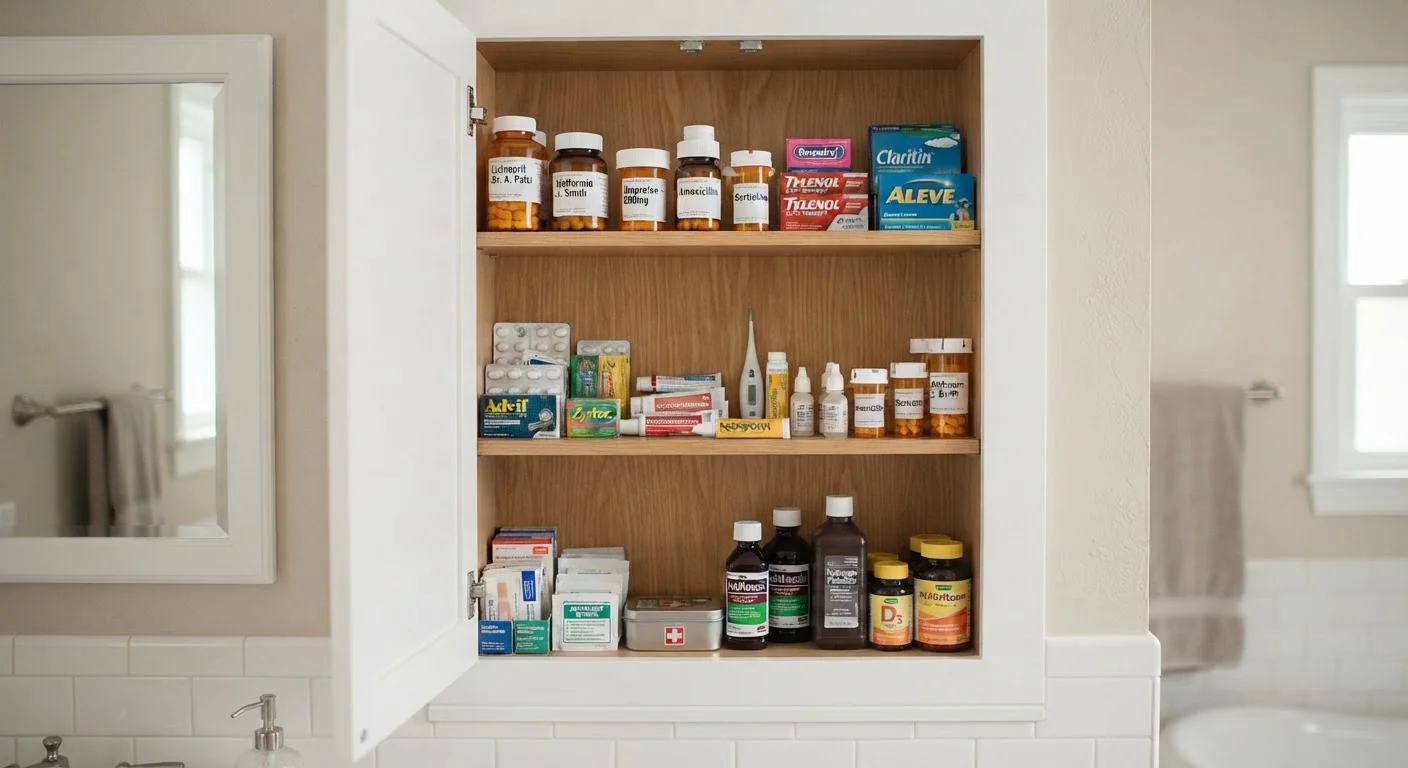
- Bathrooms and kitchen counters are among the worst places in a home to store medicines.
- A cool, dry, dark location — like a bedroom dresser drawer — is typically the safest storage spot.
- Child-resistant packaging alone is not enough; location and height matter equally for household safety.
- Checking storage conditions should be part of every medication refill routine.
What you will need
Why Storage Conditions Change What Medications Can Do
Most families focus on expiry dates when assessing whether a medication is still safe to use. But a medicine stored in the wrong conditions can lose potency well before that printed date arrives. Heat accelerates chemical breakdown in tablets and capsules. Humidity causes moisture to infiltrate packaging, degrading active ingredients and promoting bacterial growth in liquid formulations. Light — particularly direct sunlight — can trigger photodegradation, a process that alters the chemical structure of certain drugs.
The practical consequence is that a pain reliever or antihistamine stored above a stove, in a steamy bathroom cabinet, or on a sunny windowsill may be significantly less effective than the label suggests — without any visible sign that anything is wrong. For more on what storage instructions on labels actually mean in everyday terms, see our guide on reading medication storage labels.
Understanding storage isn't just about preserving efficacy — it's a foundational piece of medication safety for the whole household.
The 'Room Temperature' Rule Explained
When a label says 'store at room temperature,' it typically means 68–77°F (20–25°C), with brief excursions permitted between 59–86°F (15–30°C). In practice, most bedrooms and interior closets meet this standard year-round in temperate climates. If your home runs significantly warmer in summer, consider whether your storage spot still qualifies — and ask your pharmacist if you're unsure about a specific product.
What You'll Need Before You Start
Before reorganizing your home medication storage, gather the items below. You don't need to purchase anything specialized — the goal is to work with what most households already have.
What you will need
Opaque storage container or lockable box
Blocks light exposure and adds a physical barrier to keep medications away from children.
Silica gel desiccant packets
Absorbs excess moisture inside storage containers, especially useful in humid climates.
Small thermometer
Verifies the ambient temperature of your chosen storage location stays within the 59–77°F (15–25°C) range recommended for most medicines.
Permanent marker and labels
Marks the date a liquid medication was opened, since many have a use-by period after opening that differs from the printed expiry date.
Step-by-Step: Setting Up Safe Medication Storage at Home
Follow these steps to audit your current storage habits and set up a safer, more reliable system. The entire process typically takes under an hour and can be revisited each time you restock. Our pre-refill safety checklist pairs well with this routine.
Audit your current storage locations
Collect every medication in the household — OTC products, vitamins, supplements, and prescription bottles — and place them temporarily on a clean, flat surface. Note where each item was stored: bathroom cabinet, kitchen shelf, bedside table, car glove box, or elsewhere. This inventory gives you a clear picture of what needs to move and why.
Identify and rule out unsuitable locations
Mark any location that is:
- Within 3 feet of a heat source (stove, radiator, heating vent)
- Subject to steam or frequent humidity spikes (bathroom, laundry room)
- Exposed to direct or prolonged indirect sunlight
- Inside a vehicle (temperatures inside parked cars routinely exceed safe storage thresholds)
These locations should be removed from consideration regardless of convenience.
Choose a primary storage location
Select a location that is consistently cool (ideally 59–77°F / 15–25°C), dry, and dark. Good candidates in most homes include:
- A bedroom dresser drawer (away from exterior walls in cold climates)
- A hallway linen closet shelf above child reach
- A dedicated box on an interior wardrobe shelf
If your home has no reliably cool spot during summer months, discuss safe storage options with your pharmacist — especially for any medications that degrade quickly with heat.
Separate medications requiring refrigeration
Review each medication label for refrigeration instructions. Any product marked "store in refrigerator" (typically 36–46°F / 2–8°C) should be placed in the main compartment of your fridge — not the door, which fluctuates more — in a sealed, labeled container kept away from food. Never freeze a medication unless the label explicitly permits it.
Apply child and household safety measures
Place all medications — including vitamins and supplements — out of sight and reach of children. Child-resistant caps are a safeguard, not a guarantee. Store medicines in a locked box if your household includes young children or anyone at risk of accidental ingestion. Consider keeping a written log of what is stored and where, particularly if multiple family members manage their own medications.
Check conditions and expiry dates regularly
Storage is not a one-time task. Schedule a brief check every time you refill a prescription or restock an OTC product. Look for signs of degradation: unusual odors, discoloration, clumping of tablets, or cloudiness in liquids. Discard anything past its expiry date or showing these signs. Many pharmacies and local municipalities offer medication take-back programs — these are the safest disposal method for most drugs.
Never Share or Repurpose Prescription Containers
Transferring medications between containers — especially repurposing a prescription bottle for a different drug — removes critical labeling information and creates serious risk of mix-ups. Each medication should remain in its original, labeled packaging whenever possible. If original packaging is damaged or lost, contact your pharmacy for guidance.
Common Mistakes and How to Avoid Them
Even well-intentioned households make predictable storage errors. The bathroom medicine cabinet is the single most common mistake — it earns its name but rarely earns its keep. Showers generate bursts of steam that raise both temperature and humidity rapidly, creating exactly the conditions that degrade medications fastest.
Pill organizers left on kitchen counters face similar risks. While they improve adherence (the likelihood of taking medications as prescribed), open or loosely sealed compartments expose pills to ambient heat, light, and cooking moisture daily. If a weekly pill organizer is part of your household routine, store it inside a closed drawer or cupboard away from the stove and sink.
Refrigeration is another area of confusion. Some medications — certain liquid antibiotics, some eye drops, specific biologics — genuinely require refrigeration. Others are harmed by it. Never refrigerate a medication unless the label or your pharmacist explicitly instructs you to do so. If your household manages multiple prescriptions, a household medication record can help you track individual storage requirements for each person's medicines. For broader strategies when multiple family members have ongoing prescriptions, see managing multiple prescriptions.
This article is for general informational purposes only and does not constitute medical advice. Always consult a qualified healthcare professional or pharmacist for guidance specific to your health situation or medications.